For general contractors and specialty subs on bid work

Fractional CFO Services for Commercial Contractors.

Most fractional CFOs have never read a work-in-progress schedule. On bid work that is not a gap in the résumé, it is the difference between the capacity you have and the capacity your crews have earned. We do construction, and we do nothing else.

Construction only No long-term contracts Dedicated CFO

Houston-based, serving clients nationwide, see our Houston fractional CFO page.

The fractional advantage

A construction CFO on the months you need one, at a fraction of what the seat costs full time.

What you pay is set by scope rather than by revenue, and we quote it after we have seen your books. There is no rate card, because there is no version of this work that is the same for two contractors.

The gap

Most Fractional CFOs Have Never Read a WIP Schedule

That is not a knock on them. It is a different job. A CFO who came up through SaaS or professional services is genuinely good at the work he learned, and on a bonded contract almost none of it transfers. Here is where it comes apart.

01

He reads the P&L. Your surety reads the WIP.

A generalist opens the profit and loss, sees a good month, and reports a good month. The document that decides how much work you can carry is the work-in-progress schedule, and it can be saying something completely different at the same moment. If nobody produces it monthly, the first person to read it properly is your underwriter.

Your capacity gets set by the weakest version of your numbers


02

He forecasts off last year. You get paid off a draw schedule.

Standard practice is to model cash from historical pattern. On contract work the money arrives when the owner releases a draw and the last slice arrives when the job closes, which is somebody else's calendar, not a pattern. A forecast built the usual way will not see the squeeze until you are in it.

Profitable on paper and short in the bank, in the same month
03

He treats the estimate as fixed. It is the number everything hangs on.

Percent complete is normally derived cost-to-cost, so your estimated cost to complete decides what the schedule reports. Left untouched as the job runs, it quietly reports a contract as healthier than it is. Fade is visible in the roll-forward months before it is visible anywhere else, and only if somebody is doing the roll-forward.

You find out the job lost money after it closed
04

He files the 1099s. He does not test the certificates.

Paying subs correctly is a bookkeeping task right up until an auditor asks you to evidence coverage across the exact dates each of them worked. A sub who cannot be documented as genuinely independent gets reclassified and his payments join your payroll base. That arrives as one assessment, and it is not fixable once the audit is scheduled.

Exposure added that was never yours to carry

None of this shows up in an interview. It shows up at a bonding renewal, at closeout, or when the auditor schedules. The question worth asking any fractional CFO is not how many years he has done the job. It is whether he has produced a WIP schedule an underwriter accepted.

What Lands, and When

Contract reporting on a cadence you can plan around. Depth scales with the level you land on.

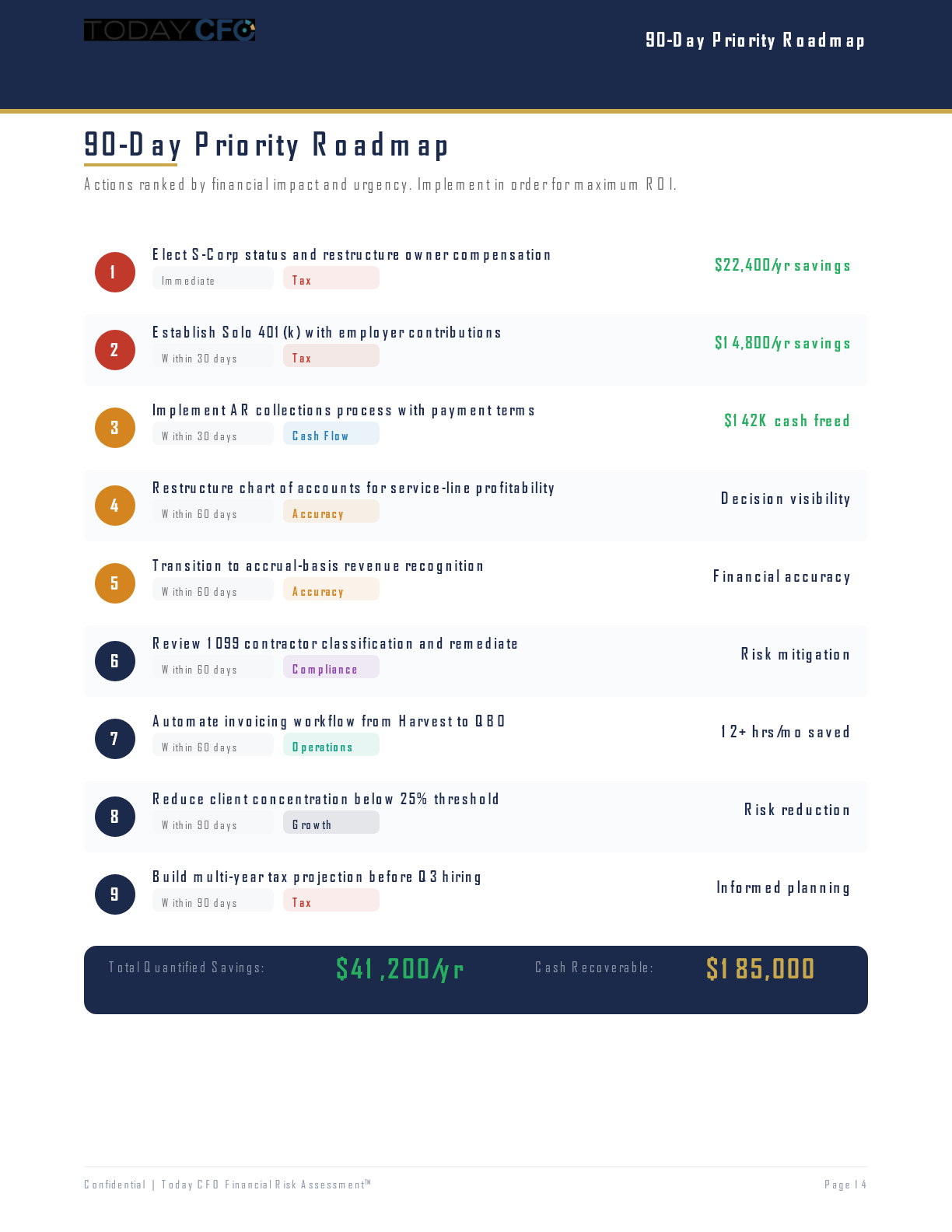
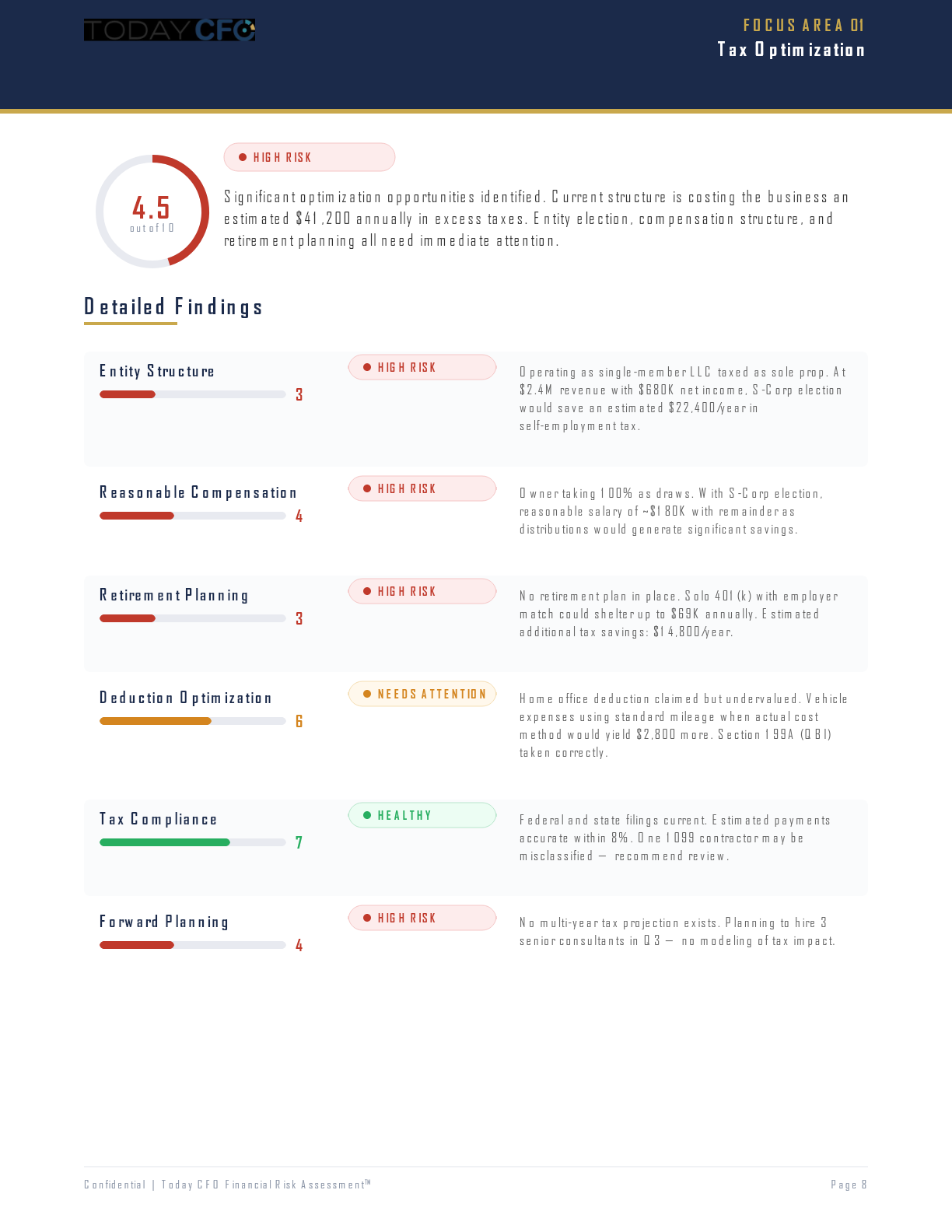
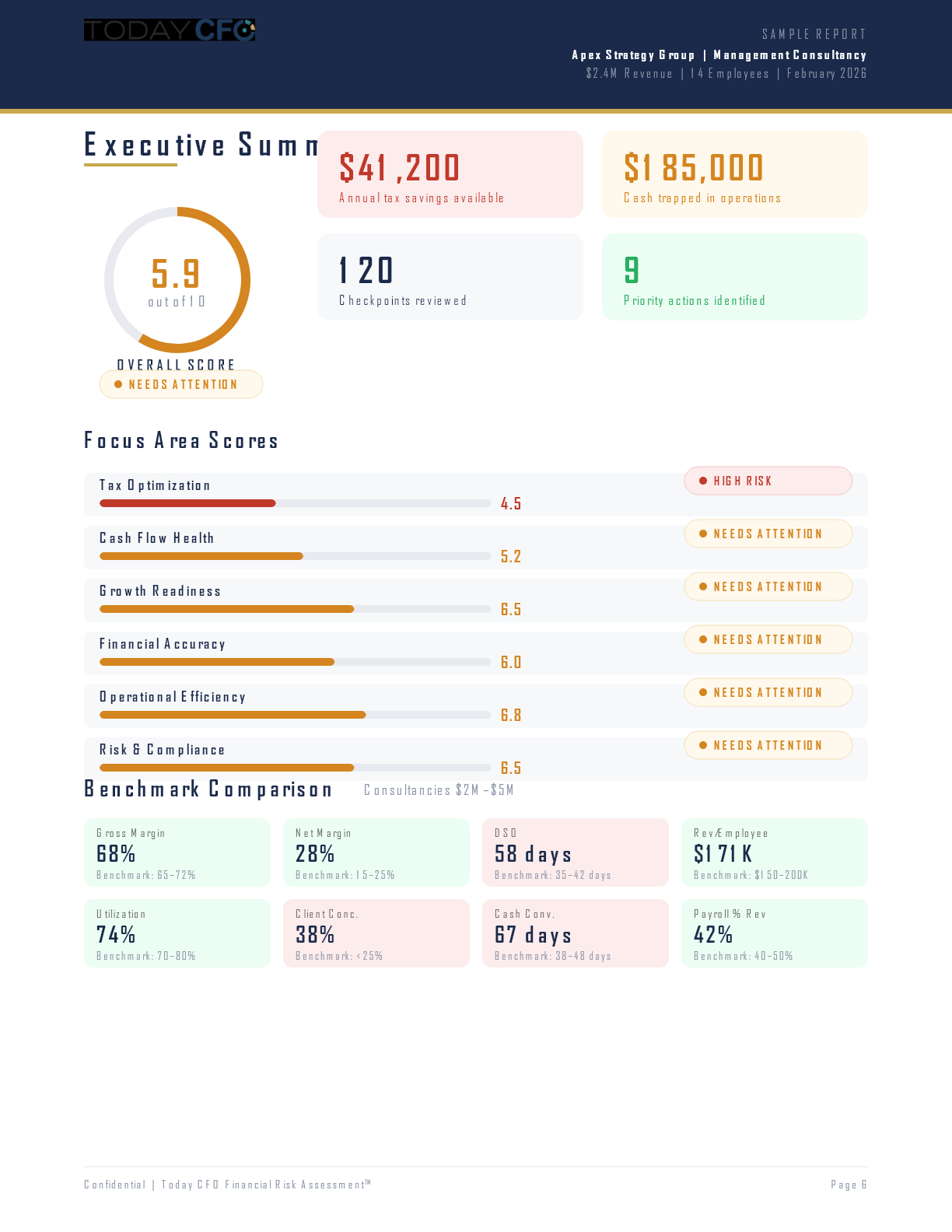
A financial dashboard and reports on screen

Work-in-Progress Schedule

Over- and under-billing by contract, in the format an underwriter expects to read.

Monthly

Cash Forecast on Your Draw Schedule

Built on your actual draws and retainage rather than on last year's pattern.

Weekly

Contract Margin Against Estimate

Fade flagged around 40% and 70% complete, while there is still job left to change it.

Monthly

Statements a Surety Can Read

P&L, balance sheet, and cash flow formatted the way a surety and a lender expect them.

Monthly

Review With the Person Who Prepared It

Not a handoff to an account manager. The month gets walked through by whoever built it.

Monthly

Subcontractor Documentation

W-9s, lien waivers, and insurance certificates collected at onboarding and kept current as they lapse.

Ongoing

Certified Payroll

Prepared and filed on the cadence each contract requires, against determinations by trade and locality.

Per contract

Bonding Capacity Review

Working capital and equity as your surety reads them, and what would move capacity before renewal.

Quarterly
Where we get called

Three Situations We Get Called Into

If one of these is yours, the assessment will tell you what it is costing before you commit to anything.

Bonding

Capacity is the constraint

The work is there. The bond line is not.

The situation

You are turning down work, or bidding smaller than you can build, because your surety will not extend the line. The WIP schedule gets assembled when someone asks for it.

Usually underneath it
Stale WIP Underbillings Working capital
What changes

A current schedule in the format an underwriter reads, and a quarterly view of what would actually move capacity before renewal.

How WIP and bonding work
Job margin

The margin shows up late

You find out at closeout, when nothing can be done.

The situation

Jobs come in under the estimate and nobody can say when it started. Without real job costing the costs sit pooled rather than coded to contracts, so the estimate and the actuals never line up while the job is still open.

Usually underneath it
No job costing No cost to complete Inherited markup
What changes

Contract margin against estimate every month, with fade flagged around 40% and 70% complete while there is still job left to correct.

How the advisory layer runs
Compliance

The audit is coming

And the subcontractor file is thin.

The situation

You cannot produce a current certificate of insurance for every sub you paid this year, and you are not certain every crew is on the right class code. Neither is fixable once the auditor has scheduled.

Usually underneath it
Missing COIs Class codes Classification
What changes

Documentation collected at onboarding and kept current, class codes reviewed before the audit rather than during it, and close classification calls escalated to a specialist.

How compliance is handled

These are the patterns we are called in on, described in general terms rather than as any one client's numbers.

Who This Is (and Isn't) For

This fits if you:

Run commercial or bonded contracts, not just service calls
Carry retainage and bill progress against a schedule of values
Have a surety relationship, or need one to bid bigger
Pay subs, and carry the classification exposure that comes with it
Run more than one entity, or payroll in more than one state
Want the numbers to decide the bid, not the other way round

This is heavier than you need if you:

Run service calls and change-outs, with no contracts open
Have no retainage, no progress billing, and no bond
Already have a finance team and want to keep it
Only need a return filed

That's fine, and we will say so. If the books are the actual problem rather than the forward view, start with contract-aware bookkeeping. Your assessment tells you which, before you commit to anything.

Tom Woolley, MBA, Founder of Today CFO

You're Not Hiring a Firm. You're Hiring Tom.

Today CFO was founded by Tom Woolley, and when you start an engagement, you work with a dedicated CFO who knows your numbers cold, not a rotating cast of junior analysts.

Tom holds degrees in Accounting and Computer Science plus an MBA, spent years in corporate technology and manufacturing, and built and sold a software company (acquired 2011) before founding Today CFO in 2015. His obsession is the one thing that quietly sinks profitable contractors: cash flow. And because he built software before he built this, your finance function arrives as a system that runs on a calendar, not as a person you have to chase for the numbers.

Accounting Degree Computer Science Degree MBA Software Exit (2011) Founded Today CFO 2015
How We Work

Before Either of Us Commits, We Look at the Books.

The assessment is a required step, not an upsell. You find out what the work is worth before you are committed to it, and we find out whether we can actually move your position.

120 checkpoints across tax, cash flow, and job margin
Your WIP, your retainage position, and your sub documentation reviewed
We scope exactly what you need, no more, no less
You keep the findings and the plan either way

What the assessment produces

A findings pack and a plan, both yours to keep whether or not you go further. It is the step where both sides decide, and it runs before either of us commits to anything ongoing.

Frequently Asked Questions

How much does a fractional CFO cost?

What you pay depends on scope rather than revenue: how many contracts are open, how many jobs you are cost coding, whether you have prevailing wage or union work, and how many entities you run. We quote after we have looked at your books, so the number is real and it does not change three months in.

Will I work with the same person?

Yes. You get a dedicated CFO who knows your business inside and out. Not a rotating cast of junior analysts.

Do I need bookkeeping too?

Advisory is only as good as the data under it. If your books are not contract-aware yet, the bookkeeping runs underneath as part of the same engagement. Same team, one invoice. Core is always on underneath whichever level fits, which is why it is not sold as a step you graduate out of.

How is this different from my CPA?

Your CPA reports what already happened and files the return. This is forward-looking: over- and under-billing while a job can still be corrected, cash built on your actual draw and retainage schedule, and contract margin against the estimate rather than at closeout. Most contractors need both.

How does this affect bonding capacity?

A surety reads your WIP schedule, working capital, and equity to decide how much work you can carry. Underbillings look like money you have spent but not invoiced, and they weaken the picture. A clean, current schedule in the format an underwriter expects is often the difference between the capacity you have and the capacity you need. More on WIP and bonding.

Do you handle certified payroll and subcontractor compliance?

Yes, as part of the engagement rather than something you have to remember to request. Certified payroll and prevailing wage where the contract calls for it, W-9s, lien waivers and insurance certificates kept current, 1099s reconciled to what you actually paid, and class codes reviewed before the comp audit rather than during it. More on compliance.

How much time does this take from me?

About 2-4 hours/month for strategy calls and reviews. We do the heavy lifting. You make decisions.

What if I outgrow fractional CFO?

Great problem to have. We'll help you hire a full-time CFO when you're ready, and hand off documented processes, clean books, and a finance function that already runs.

Start With a Financial Risk Assessment

We work through 120 checkpoints across tax, cash flow, and job margin, then tell you straight which level you need, or whether a simpler fix will do. You keep the findings and the plan either way, and if this is not right for you we will say so.

$497 assessment, required before either side commits Findings are yours to keep either way Dedicated CFO, not a call center Cancel with 30 days' notice